


Diesel bug is caused by bacteria and fungi that grow in water-contaminated fuel.
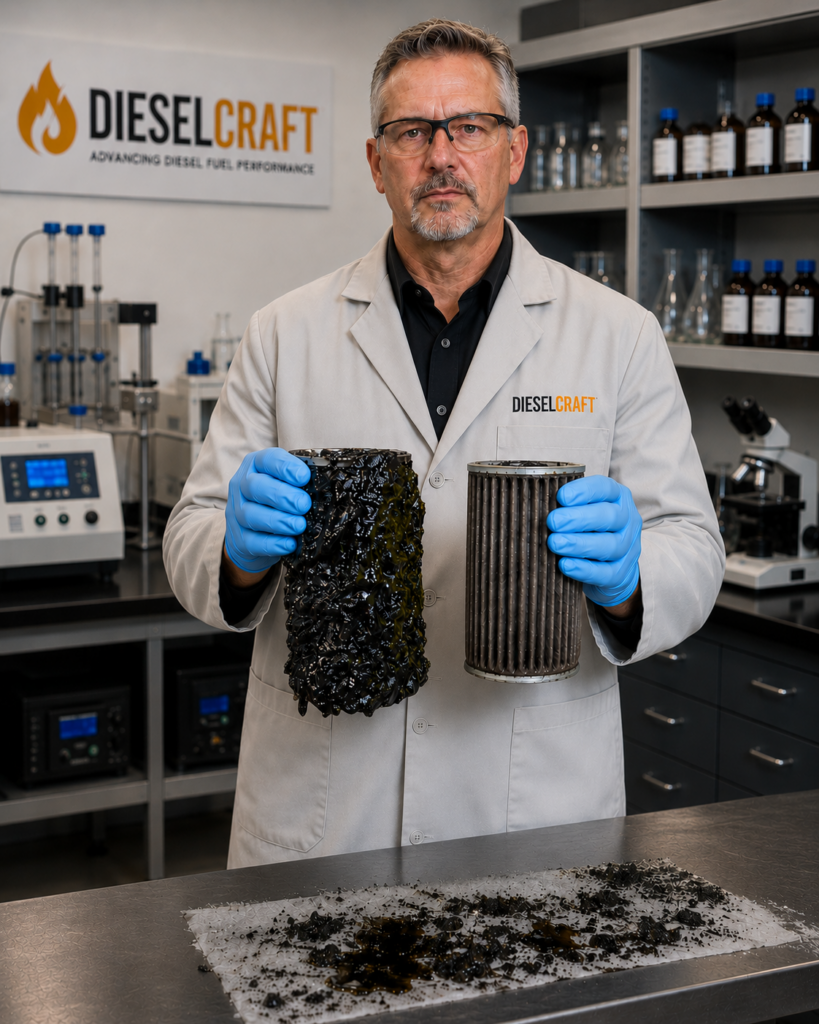
Diesel bug is a common term used to describe microbial contamination in diesel fuel. It is caused by bacteria, fungi, and mold that grow inside fuel tanks when water is present.
These microorganisms live and reproduce at the boundary layer where diesel fuel and water meet. Diesel fuel alone does not support microbial growth, but even small amounts of water from condensation, leaking tank vents, poor fuel handling, or contaminated deliveries can create the environment needed for microbes to thrive.
As the bacteria and fungi grow, they feed on components within the diesel fuel and begin producing:
- Sludge and slime
- Organic acids
- Dark sediment
- Biomass deposits
Over time, this contamination can:
- Plug fuel filters
- Corrode fuel tanks
- Damage injectors and pumps
- Restrict fuel flow
- Cause generator failures
- Create poor combustion and engine performance
The contamination is often found as:
- Black slime
- Brown sludge
- Stringy or jelly-like material
- Dark deposits at the bottom of tanks
Modern ultra-low sulfur diesel (ULSD) and biodiesel blends are more susceptible to microbial growth because they absorb water more readily than older diesel fuels.
Simply adding biocide is usually not enough to solve the problem. While biocides may kill the microbes, the dead biological material, sludge, water, and acidic residue still remain inside the tank and fuel system.
A complete corrective process typically includes:
- Removing water from the tank
- Killing active microbial growth if necessary
- Filtering the fuel to remove sludge and debris
- Cleaning the tank bottom
- Retesting the fuel condition
Fuel polishing systems such as those from Dieselcraft help remove water, sludge, and microbial contamination before it damages diesel engines or standby generators.
Remove it fast: diesel contamination solution.
Recent Comments