


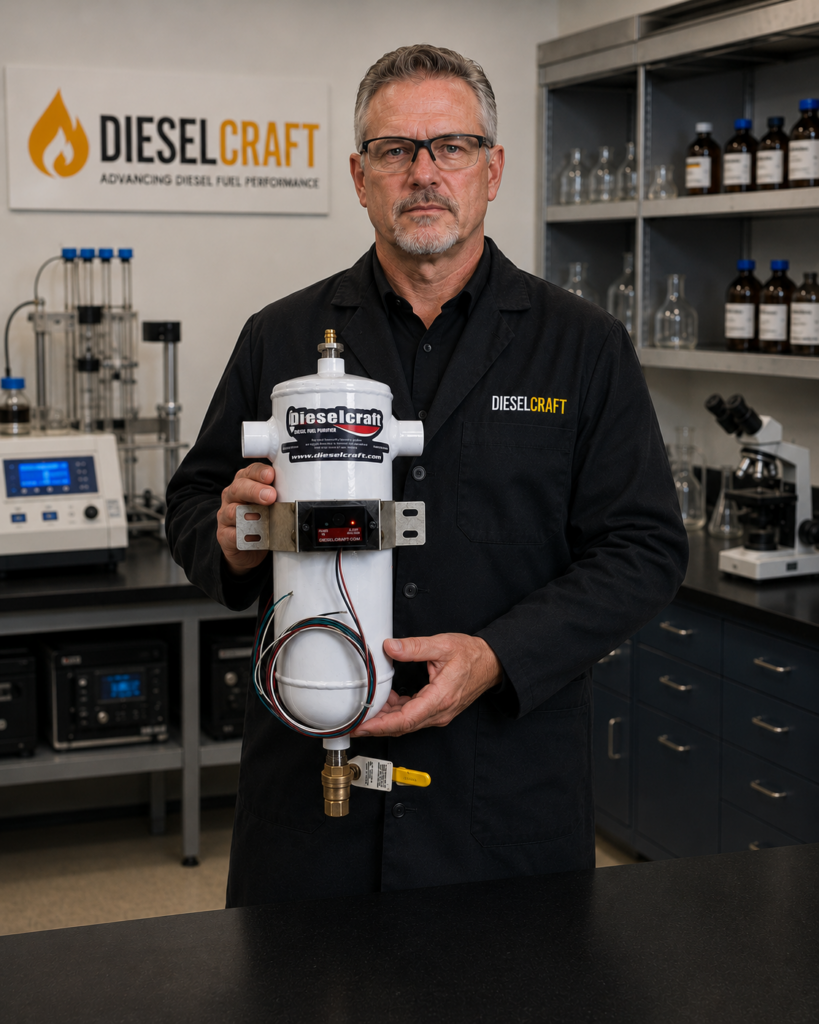
How to Fix Contaminated Diesel Fuel Problems
Water, sludge, rust, and microbial contamination can quickly turn clean diesel fuel into a costly maintenance problem.
Contaminated fuel can:
- Damage fuel injectors
- Plug fuel filters
- Cause poor engine performance
- Shut down standby generators
- Corrode fuel tanks
- Lead to expensive diesel engine repairs
Dieselcraft fuel polishing systems help remove contamination and restore fuel quality before serious damage occurs.
Signs Your Diesel Fuel Is Contaminated
Watch for these warning signs:
✅ Cloudy or dark fuel
✅ Water in the bottom of the tank
✅ Black sludge or slimy deposits
✅ Frequent fuel filter plugging
✅ Poor combustion or injector wear
✅ Hard-starting generators
✅ Corrosion inside fuel tanks
If you notice any of these symptoms, your fuel should be tested immediately.
Common Diesel Fuel Contaminants
Water
Water is the most common diesel fuel contaminant. It causes corrosion and creates the ideal environment for microbial growth.
Microbial Growth
Often called “diesel bug” or “diesel algae,” microbes grow at the fuel-water interface and produce sludge, acids, and filter-plugging debris.
Solids
Rust, dirt, scale, and debris can damage pumps, injectors, and fuel transfer equipment.
Aged Fuel
Over time, diesel fuel oxidizes and forms gums, varnish, and deposits that reduce fuel quality and engine performance.
The Correct Way to Fix Contaminated Diesel Fuel
Simply adding chemicals or fuel additives is rarely enough.
To properly restore fuel quality, contamination must be physically removed from the tank.
Step 1: Test the Fuel
Before treatment, determine the condition of the fuel by testing for:
- Water contamination
- Microbial growth
- Fuel clarity
- Sediment and sludge
Testing identifies the actual problem before corrective action begins.
Step 2: Remove Water
Water must be removed from the tank before fuel can be stabilized.
As long as water remains in the system, microbial contamination can continue to grow.
Step 3: Filter to 2 Microns
Fine filtration removes:
- Sludge
- Rust
- Biological debris
- Sediment
- Suspended solids
Proper filtration helps restore fuel cleanliness and protect engine components.
Step 4: Retest the Fuel
After polishing and filtration, test the fuel again to verify that contamination levels have been reduced and the fuel is suitable for use.
Why Fuel Polishing Works Better Than Additives Alone
Fuel additives may help stabilize fuel, but they do not physically remove:
- Water
- Sludge
- Rust
- Sediment
- Dead microbial material
Dieselcraft fuel polishing systems continuously circulate fuel through specialized separation and filtration equipment, physically removing contamination from the tank.
The result is cleaner fuel and greater equipment reliability.
Dieselcraft Removes
✅ Free Water
✅ Diesel Sludge
✅ Microbial Debris
✅ Rust and Sediment
✅ Particulate Contamination
✅ Oxidized Fuel Deposits
Can Contaminated Diesel Fuel Be Fixed?
In most cases, yes.
Contaminated diesel fuel can often be restored through proper testing, water removal, fuel polishing, and filtration.
The sooner contamination is identified, the easier and less expensive it is to correct.
Need Help?
Dieselcraft can help you test, clean, and restore contaminated diesel fuel before it causes:
- Engine failures
- Generator downtime
- Plugged filters
- Injector damage
- Costly repairs
Contact Dieselcraft Today
530-613-2150
Don’t wait until contaminated fuel leaves your equipment stranded. Test it. Clean it. Restore it.
The Best Fuel Tank Cleaning Additive
STAR BRITE Star Tron Fuel Tank Cleaner – Remove Sludge, Varnish & Other Deposits – Rejuvenate Old, Stale Fuel – Concentrated Formula Works In Gas Tanks & Diesel Tanks – 64 OZ
Buy Now
Frequently Asked Questions
A DIESELCRAFT Fuel Purifier removes free water, heavy particulates, and sludge from diesel fuel using a no‑filter, mechanical separation process. Fuel enters the chamber, slows down, and contaminants drop out by gravity and impact. No disposable filter element is used.
DIESELCRAFT purifiers are designed to remove:
• Free water
• Rust flakes
• Scale
• Sludge and microbial mass
• Heavy particulates
They do not remove fine suspended solids or emulsified water. A downstream filter is still required for polishing to micron levels.
No. All FP DIESELCRAFT Fuel Purifiers operate without a filter element. They rely entirely on mechanical separation and our proprietary media.
Drain intervals depend on fuel condition. In clean tanks, draining may be infrequent. In older or contaminated tanks, the bowl may need to be drained more often. All units are supplied with a water sensor to indicate draining is needed
DIESELCRAFT purifiers remove biomass clumps and the water associated with microbial growth, but they do not kill microbes. A biocide treatment is required if active growth is present.
Recent Comments