


Fuel Polishing Process for Generator Tanks
🚨 Fuel Contamination? Act Now — Prevent Generator Failure
Get Help Now
Test Your Fuel
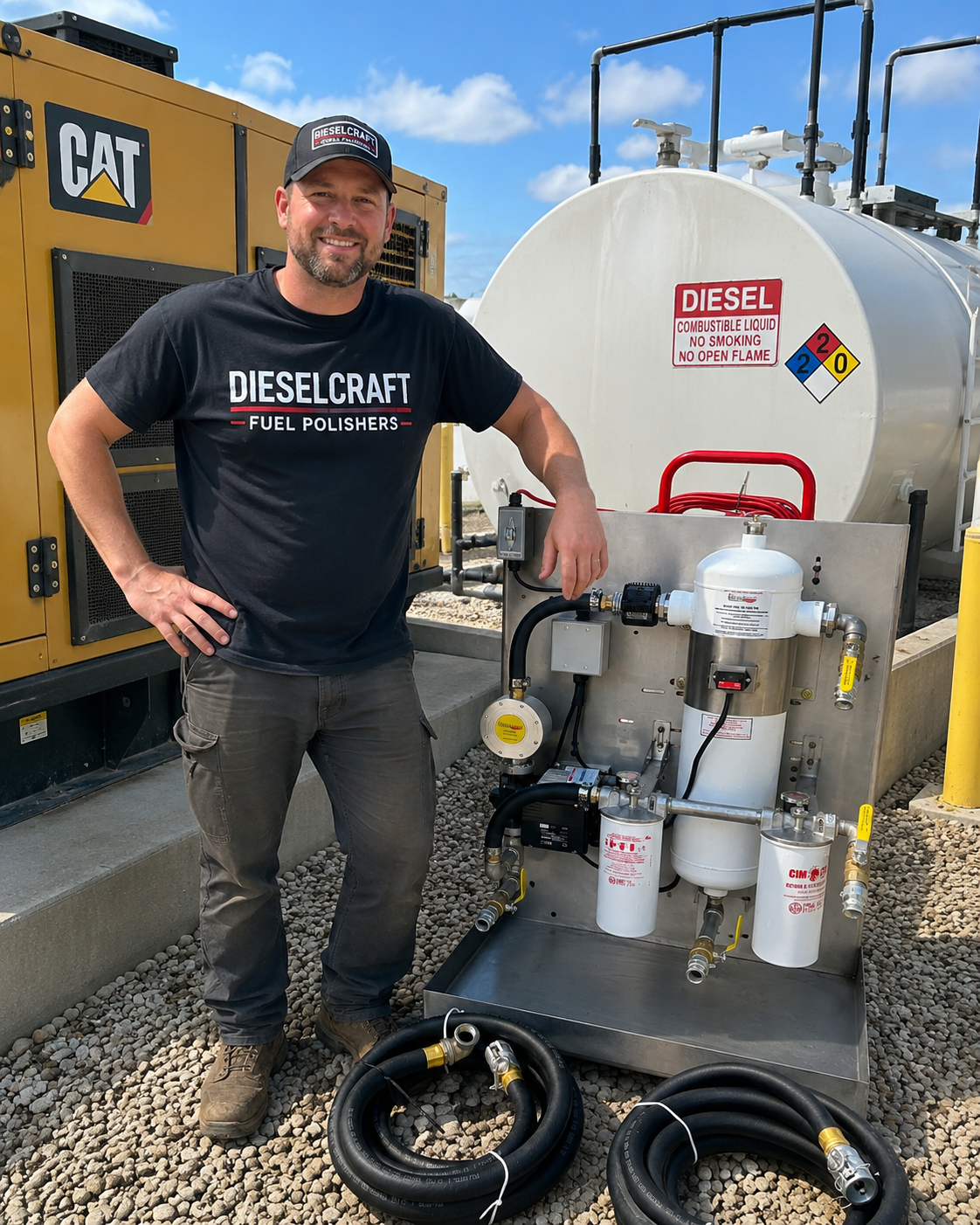
The fuel polishing process restores diesel fuel quality by removing water, sludge, and microbial contamination. This step-by-step guide outlines how to properly circulate and clean fuel in standby generator belly tanks to ensure reliable operation.
Typical Generator Tank Layout
Most standby generators sit on a double-wall belly tank, with approximately 60% of the tank extending forward from the generator and fully accessible.
- Fill port box located at the front left corner
- Electrical control box positioned near the fill area
- Two breathers installed on top of the tank
- Vent stack located at the rear right corner
Step 1: Selecting the Fuel Pickup Location
Primary Option – Vent Stack
The preferred pickup point is the vent stack. In most installations, the vent stack can be removed to allow direct insertion of a suction pipe into the tank.
Secondary Option – Internal Bung Port
If the vent stack cannot be accessed, a secondary option may be available through a bung port inside the generator enclosure near the engine fuel pickup line. Note: Not all tanks include this port.
Step 2: Installing the Suction and Return Lines
- Insert a rigid suction pipe long enough to reach the bottom of the tank
- Connect the suction pipe to the fuel polishing system suction line
- Route the return line back to the fill port box at the front of the tank
Step 3: Preparing for Fuel Polishing
- Zero the flow meter
- Take an initial fuel sample to establish a baseline
- Secure the return line inside the fill port to prevent movement
Step 4: Operating the Fuel Polishing System
- Start the pump and allow continuous operation
- Monitor the water sensor for accumulation
- Drain only the water when indicated
- Track flow rate using the flow meter
- Circulate at least one full tank volume
- Monitor filter gauges for replacement indicators
- Dispose of water and filters according to environmental regulations
Step 5: Completion and Maintenance
After one complete tank turnover, fuel should meet acceptable cleanliness standards for extended generator operation. For optimal reliability, fuel polishing should be performed every six months.
Benefits of Proper Fuel Polishing
- Removes water, sludge, and microbial contamination
- Prevents generator failure and downtime
- Extends fuel storage life
- Improves fuel system performance
Need a Fuel Polishing System?
Continuous fuel polishing systems provide ongoing protection by removing contamination before it becomes a problem.
Contact us to size the right system for your generator and tank.
Protect Your Fuel. Protect Your Generator.
A properly executed fuel polishing process ensures long-term fuel stability and reliable standby power when you need it most.
Fuel Polishing Process – Frequently Asked Questions
What is fuel polishing?
Fuel polishing is the process of circulating diesel fuel through a filtration and separation system to remove water, sludge, and microbial contamination.
Not sure if your fuel needs polishing?
Request a fuel analysis or system recommendation based on your tank size and application.
Get Expert Recommendation
How often should fuel polishing be performed?
Most standby generator systems require polishing every 6 months, but high-risk environments may require more frequent service.
How do you know if fuel needs polishing?
Signs include cloudy fuel, sludge buildup, water contamination, clogged filters, and poor engine performance.
Seeing these signs?
Fuel contamination gets worse fast. Early action prevents costly generator failure.Test Your Fuel Now
Can fuel polishing remove water from diesel fuel?
Yes. Fuel polishing systems remove both free and emulsified water, preventing microbial growth and corrosion.
What causes sludge in diesel fuel?
Sludge forms from microbial growth, water contamination, and fuel degradation over time.
How long does the fuel polishing process take?
The system runs until the full tank volume has been circulated at least once. Larger tanks may require extended operation.
Is fuel polishing better than using additives?
Yes. Fuel polishing removes contamination, while additives only treat symptoms and cannot eliminate sludge or water.
Stop treating symptoms. Fix the problem.
Upgrade to a fuel polishing system that removes contamination permanently.
View Fuel Polishing Systems
What happens if you don’t remove water from diesel fuel?
Water leads to microbial growth, corrosion, sludge buildup, and eventual engine or generator failure.
Don’t wait for failure.
Water contamination is the #1 cause of diesel fuel problems. Take action now.
Talk to a Fuel Specialist
Recent Comments