


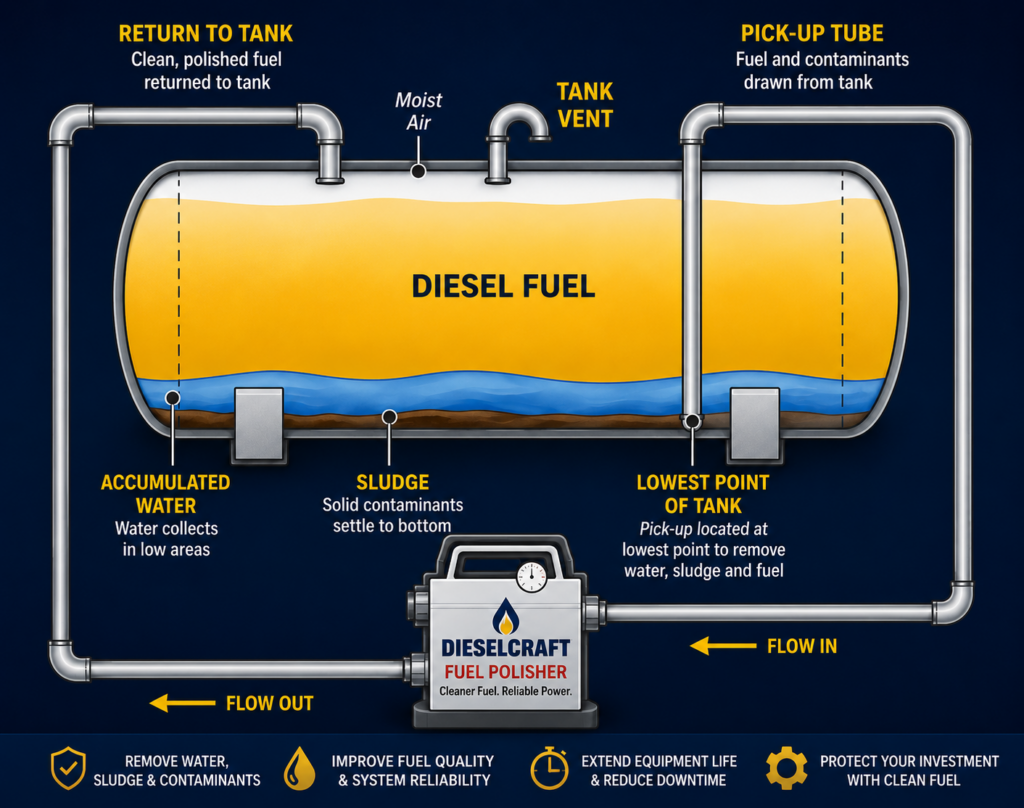
Water is unavoidable in any diesel storage system. It enters tanks through condensation, humid air entering the vent, temperature swings, and contaminated fuel deliveries. Over time, this moisture settles to the bottom of the tank because water is heavier than diesel.
Common Sources of Water
- Condensation: Warm days and cool nights cause moisture to form on tank walls.
- Tank Venting: Tanks “breathe,” pulling in humid air that condenses into water.
- Fuel Deliveries: Even clean fuel can contain trace water.
- Long-Term Storage: Idle tanks allow water to accumulate at the bottom.
What Water Does Inside a Diesel Tank
Once water settles at the bottom, it begins damaging the tank and the fuel. Water accelerates corrosion, destabilizes diesel, and creates the perfect environment for microbial growth.
Effects of Water in the Tank
- Corrosion of steel and aluminum components
- Fuel darkening and degradation
- Ice formation in cold weather
- Injector and pump wear from rust particles
- Sludge formation at the tank bottom
How Microbes Grow in Diesel Fuel
Microbes enter the tank through the fuel supply chain. They remain dormant until they find water. The fuel–water interface becomes their breeding ground, allowing bacteria, fungi, and yeast to multiply rapidly.
What Microbes Produce
- Sludge and biomass
- Acids that corrode tanks
- Filter-plugging mats
- Fuel instability and odor
Consequences of Microbial Contamination
Microbial growth is the leading cause of unexpected diesel system failures. Once established, colonies spread through the tank and fuel system, clogging filters and damaging equipment.
Common Problems Caused by Microbes
- Clogged filters and shutdowns
- Injector fouling
- Fuel pump wear
- Tank corrosion
- Generator or engine failure during critical use
Preventing Water and Microbial Problems
Fuel polishing systems remove water, sludge, and contaminants, restoring fuel quality and preventing microbial growth. Regular testing and maintenance ensure long-term reliability.
Best Practices
- Periodic bottom sampling
- Water detection testing
- Microbial growth testing
- Routine fuel polishing
- Keeping tanks as full as possible to reduce condensation
Recent Comments